


1. Session 9 (2001)
The abandoned Danvers State Hospital may be one of the greatest liminal horror locations ever put on film.
Director Brad Anderson transforms the sprawling psychiatric institution into a maze of decaying corridors, forgotten treatment rooms, and endless tunnels. As an asbestos removal crew works inside the abandoned hospital, the building itself begins to feel alive.
Unlike many haunted house films, Session 9 derives most of its terror from atmosphere. The vast emptiness of Danvers creates a sense that reality itself is unraveling. Every hallway seems to lead nowhere, and every room feels disconnected from time.
For fans of The Backrooms, this is essential viewing.

Trailer:
Watch Trailer
2. Carnival of Souls (1962)
Nearly forty years before liminal spaces became a recognized concept, Carnival of Souls was already perfecting the aesthetic.
Following a near-fatal accident, a young woman becomes obsessed with an abandoned carnival pavilion that appears to exist outside reality. Throughout the film she drifts through empty churches, deserted roads, vacant gathering spaces, and forgotten architecture.
The result feels less like a traditional horror movie and more like a dream where humanity has vanished.
Its influence on psychological and atmospheric horror cannot be overstated.
Trailer:
The film’s abandoned pavilion and empty public spaces remain some of the earliest examples of liminal horror on film.
3. The Shining (1980)
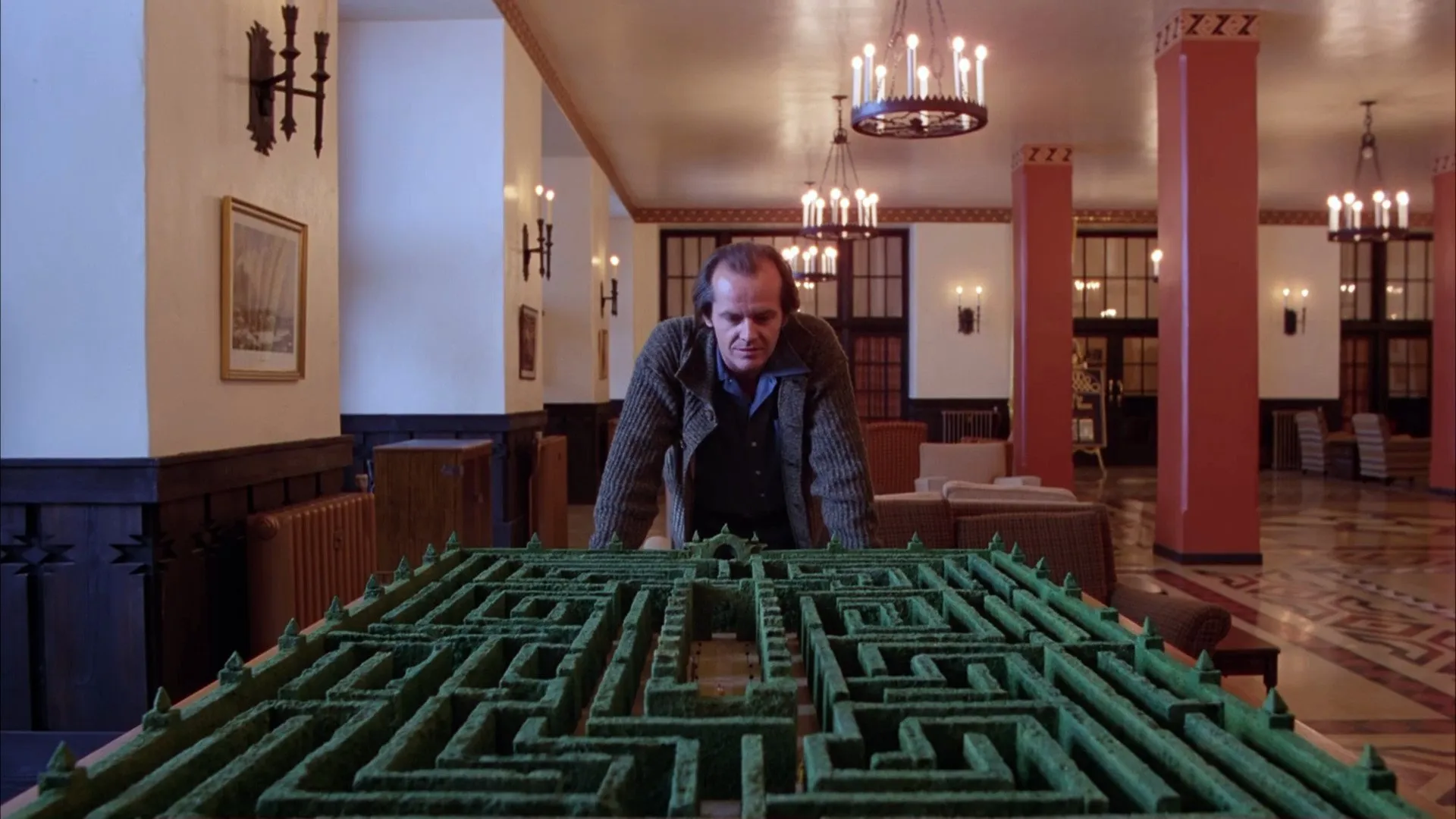
The Overlook Hotel remains one of the most iconic liminal spaces in horror history.
Stanley Kubrick filled the hotel with endless hallways, massive empty ballrooms, silent lounges, and impossible architectural layouts. The hotel feels wrong long before any ghosts appear.
One reason the film continues to fascinate audiences is the subtle suggestion that the Overlook’s geography doesn’t make sense. Hallways lead to impossible locations and rooms appear where they shouldn’t exist.
The feeling of being trapped in a familiar place that no longer obeys reality is precisely what makes liminal horror so effective.
Trailer:
Watch Trailer
4. Pulse (Kairo) (2001)
Kiyoshi Kurosawa’s masterpiece explores loneliness through space itself.
As mysterious supernatural events spread through technology, Tokyo gradually becomes emptier and quieter. Characters wander through abandoned apartments, vacant offices, empty factories, and silent city streets.
Rather than relying on jump scares, Pulse creates terror through absence. The world feels as though it is slowly being abandoned by humanity.
Its bleak atmosphere and existential dread make it one of the most powerful examples of liminal horror ever created.
Trailer:
Watch Trailer
5. Grave Encounters (2011)
Years before The Backrooms became an online phenomenon, Grave Encounters explored many of the same concepts.
A paranormal investigation team becomes trapped inside an abandoned psychiatric hospital that gradually transforms into an impossible labyrinth. Hallways stretch endlessly, doors disappear, and rooms shift locations.
The building ceases to function according to the laws of physics.
The resulting nightmare feels remarkably similar to the infinite spaces that would later define Backrooms mythology.
Trailer:
Watch Trailer
6. Mirrors (2008)
The most visually obvious precursor to Backrooms horror may be Mirrors.
Starring Kiefer Sutherland, the film centers on a burned-out department store that sits abandoned after a devastating fire. Vast retail floors, endless escalators, vacant display areas, dark corridors, and reflective surfaces create an atmosphere of uncanny emptiness.
The Mayflower department store feels like a forgotten commercial space frozen in time. Even before the supernatural elements emerge, the location itself is deeply unsettling.
Many modern liminal-space photographs look strikingly similar to scenes from this film.
Trailer:
Watch Trailer
The burned-out Mayflower department store serves as a perfect liminal setting—an abandoned commercial space frozen in time and haunted by reflections that seem to exist in another reality.
7. Flatliners (1990)
Joel Schumacher’s supernatural thriller uses transitional spaces to reinforce its themes of life, death, and the unknown.
Much of the film unfolds in empty university buildings, darkened hospital corridors, and vacant medical facilities during late-night experiments. These sterile environments create a sense that the characters are existing between worlds.
The film’s obsession with crossing thresholds makes it a natural companion piece to modern liminal horror.
Trailer:
Watch Trailer
8. Jacob’s Ladder (1990)
Few films capture the feeling of being trapped between realities better than Jacob’s Ladder.
The movie drags viewers through abandoned subway stations, empty hospitals, industrial corridors, and surreal urban landscapes that feel detached from the normal world.
Nothing is stable. Nothing is certain.
The environments seem caught between life and death, reality and nightmare. Many of the visual techniques later adopted by psychological and liminal horror filmmakers can be traced directly back to this film.
Trailer:
Watch Trailer
9. Skinamarink (2022)
Although it arrived after the rise of Backrooms culture, Skinamarink feels like the cinematic embodiment of liminal horror.
The film transforms an ordinary house into a nightmare of dark hallways, empty rooms, staircases, and unseen corners. Traditional storytelling takes a backseat to atmosphere, forcing viewers to experience the world as if trapped inside a fragmented childhood memory.
Whether audiences love it or hate it, few films have captured the feeling of a liminal nightmare more effectively.
Trailer:
Watch Trailer
10. The Langoliers (1995)
Based on Stephen King’s novella, The Langoliers presents one of horror’s most memorable liminal settings.
After passing through a mysterious phenomenon, airline passengers arrive in a version of reality that has been abandoned by everyone else. They find themselves wandering through an empty airport where restaurants, terminals, and waiting areas sit frozen in time.
The complete absence of people transforms a familiar location into something deeply unsettling.
For anyone fascinated by photographs of deserted malls, abandoned office buildings, or empty airports, The Langoliers remains a fascinating early example of liminal horror.
Trailer:
Watch Trailer
