

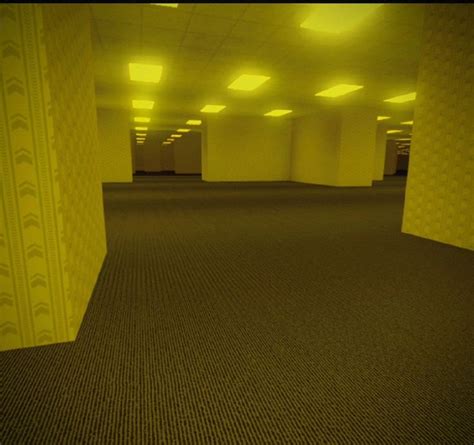

The scariest thing about The Backrooms is not necessarily whatever is waiting around the next corner. It is the architecture itself: the stained carpet, the buzzing lights, the walls that seem to have been copied and pasted forever. It is a place built for human activity after humanity has been quietly removed.
That is the secret handshake of liminal horror. An empty room is not automatically frightening. An empty room that looks like it should be full of people—an office, a hotel, a hospital, a housing development, a school—is something else. It suggests an absence. It makes you wonder who left, why they left, and whether the building noticed.
As Kane Parsons’ The Backrooms brings an internet-born nightmare into the feature-film spotlight, the best companion movies are not necessarily the ones with identical yellow corridors. They are the films that understand the existential insult of a familiar space becoming hostile. These are the movies to watch when you want more empty infrastructure, endless passageways, dead-end design, and places that seem to be waiting for a population that never arrives.
1. The Incident (2014)

If you want the most direct follow-up to The Backrooms, start here. Isaac Ezban’s The Incident traps its characters in impossible architecture: a staircase that refuses to end and a stretch of road that keeps folding back on itself. The horror comes from watching ordinary navigation fail. Stairs are supposed to take you somewhere. Roads are supposed to lead away. When those promises collapse, the world becomes a badly designed machine.
Ezban is less interested in an anonymous internet image than in the emotional consequences of spatial imprisonment. People still argue, panic, ration resources, and make terrible decisions, but the environment has become the dominant character. It does not chase anyone. It simply refuses to cooperate.
That makes The Incident a useful companion piece for The Backrooms. Both understand that a corridor can be more frightening than a monster when it has no obligation to end. The movie is rougher and more overtly conceptual than some of the films on this list, but its central nightmare is pure liminal horror: being stuck inside a place that has forgotten what it was built to do.
2. Session 9 (2001)
Brad Anderson’s Session 9 is the gold standard for making an abandoned building feel inhabited by its own history. The setting is a decaying psychiatric hospital, where an asbestos-removal crew begins work among peeling walls, empty wards, and corridors that seem to extend beyond the reach of the crew’s flashlights.
The film does not need to cover every surface in supernatural wallpaper. Its power comes from industrial neglect. This was once a place of schedules, staff, patients, records, and routines. Now it is a cavernous shell full of dust and locked rooms. The building’s original purpose has not disappeared so much as curdled.
Session 9 is also a reminder that liminal horror works best when a location retains traces of its former occupants. An abandoned hospital is frightening because it is not truly empty. It is crowded with implied lives. Anderson turns that tension into a slow psychological bleed, using the hospital’s architecture to make every character seem isolated even when they are standing in the same hallway.
It is not a jump-scare delivery system. It is a movie about the acoustics of a bad idea.
3. Kairo (2001)
Before “liminal space” became a familiar online horror category, Kiyoshi Kurosawa’s Kairo was already turning urban emptiness into an infection. The film’s Tokyo is full of apartments, offices, computer rooms, and public spaces that should connect people. Instead, they become evidence of an increasingly severe social disappearance.
Kairo is less interested in the maze than in what the maze does to human connection. Its ghosts are not simply predators hiding in dark rooms. They are manifestations of isolation, appearing in spaces that should be communal and making those spaces feel spiritually evacuated.
This is one of the essential films for understanding why liminal horror can feel sad before it feels scary. The dread is not just “something is in the room.” It is “the room has become proof that nobody is coming.” Kurosawa’s pacing is patient, his compositions are unnervingly still, and his use of negative space remains devastating. If The Backrooms asks what happens when someone falls out of reality, Kairo asks what happens when reality remains intact but stops containing meaningful human contact.
4. Skinamarink (2022)
Kyle Edward Ball’s Skinamarink takes the familiar home and strips away its instructions. Doors disappear. Windows become useless. Hallways stretch into darkness. Furniture sits in rooms that no longer seem to belong to a functioning household. The movie’s minimalism has divided viewers, but its central idea is difficult to deny: childhood terror often begins when a familiar environment loses its readable shape.
This is liminal horror at its most reduced. There is little conventional coverage, little reassuring geography, and almost no stable sense of where anyone is. The camera lingers on corners, ceilings, and fragments of domestic space, forcing the viewer to search for information that the film has no interest in providing.
Like the original Backrooms image, Skinamarink understands the power of a badly lit non-place. Its house is not grand or gothic. That is precisely the problem. It is the sort of place a child should know by heart, now rendered alien by darkness and absence. Watch it late, alone, and with your phone out of reach. The movie is not interested in entertaining your multitasking brain.
5. Vivarium (2019)
Where The Backrooms weaponizes an endless interior, Lorcan Finnegan’s Vivarium weaponizes the planned suburb. A young couple enters a development of identical houses and discovers that the dream of homeownership has been transformed into a sealed environment. Every street looks the same. Every house offers the same bland promise. Escape is less difficult than conceptually impossible.
Vivarium is liminal horror with a fluorescent smile. Its spaces are not abandoned in the traditional sense; they are aggressively maintained, pristine, and ready for occupancy. That makes the emptiness even nastier. The neighborhood seems designed to simulate community while ensuring that nobody can meaningfully belong to it.
The film’s satire is blunt, but the visual concept is strong: a place intended for families becomes a habitat, then a trap. It belongs on this list because liminal horror is not only about ruins and derelict buildings. It is also about environments that have been built according to a human template but contain no actual human life.
6. 1408 (2007)
John Cusack spends most of 1408 inside one hotel room, which sounds like a limitation until the room starts changing the rules. The setting is a temporary space by definition: a room meant to be occupied, cleaned, and vacated by strangers. It has no personal history beyond whatever the next guest brings through the door.
That anonymity makes the hotel room an ideal liminal setting. It is private but not intimate, comfortable but never truly safe. In 1408, the room becomes a hostile interface, offering doors, windows, telephones, and familiar furniture as if they are controls in a game designed by someone who hates you.
The movie is more polished and conventionally plotted than Skinamarink or The Incident, but it shares their fascination with broken spatial logic. A room should have limits. A hotel room should have an exit. Once those assumptions fail, even a bed and a thermostat become sinister. It is a good pick for viewers who want their liminal horror with a larger dose of supernatural spectacle.
7. Grave Encounters (2011)
Grave Encounters begins with a familiar found-footage setup: a television crew spends the night in an allegedly haunted psychiatric hospital. The setup is knowingly trashy, but the movie earns its place here when the building stops behaving like a building.
Doors lead back to the same corridors. The exterior becomes unreachable. The crew’s cameras record a location that has effectively detached from the outside world. The hospital is no longer a set of rooms connected by a floor plan; it is a closed system with no useful map.
The film is louder and more playful than Session 9, and it eventually leans into creature-feature chaos. Still, its strongest idea is wonderfully simple: what if the haunted house does not merely contain ghosts, but edits itself around you? For anyone drawn to the navigational nightmare of The Backrooms, that is the hook.
The best liminal horror leaves some rooms unexplained
There is a temptation, especially when an online horror concept becomes a feature, to explain the architecture. What is the place? Who built it? What rules govern it? Where is the monster’s nest? Some answers can be satisfying, but explanation is not the same thing as dread. The Backrooms works because the image arrives before the mythology. The room is already wrong before anyone tells us why.
That is what these films have in common. The Incident makes movement meaningless. Session 9 turns an abandoned institution into a psychological pressure chamber. Kairo makes public life feel spiritually vacant. Skinamarink corrupts the home. Vivarium turns suburbia into a habitat. 1408 makes temporary lodging permanent. Grave Encounters traps people inside a building that has stopped acknowledging the outside world.
They are not all “Backrooms movies,” and that distinction matters. Liminal horror is not a visual filter or a synonym for yellow wallpaper. It is the fear of being stranded inside a space whose human purpose has vanished—or was always a lie. Once you start looking for that feeling, every empty office, silent hotel corridor, and half-finished housing development begins to look like an invitation.
Do not accept it.