


The haunted house is horror’s most reliable piece of real estate. Give a family a creaky staircase, a locked room, and wallpaper that seems to breathe, and the mortgage is already paid in full.
Comics, however, are uniquely good at making that formula misbehave. A panel can turn a floor plan into a maze, stretch a hallway across time, or make the house less a place than a symptom. The best haunted-house comics understand that the ghost is often the least interesting thing in the building.
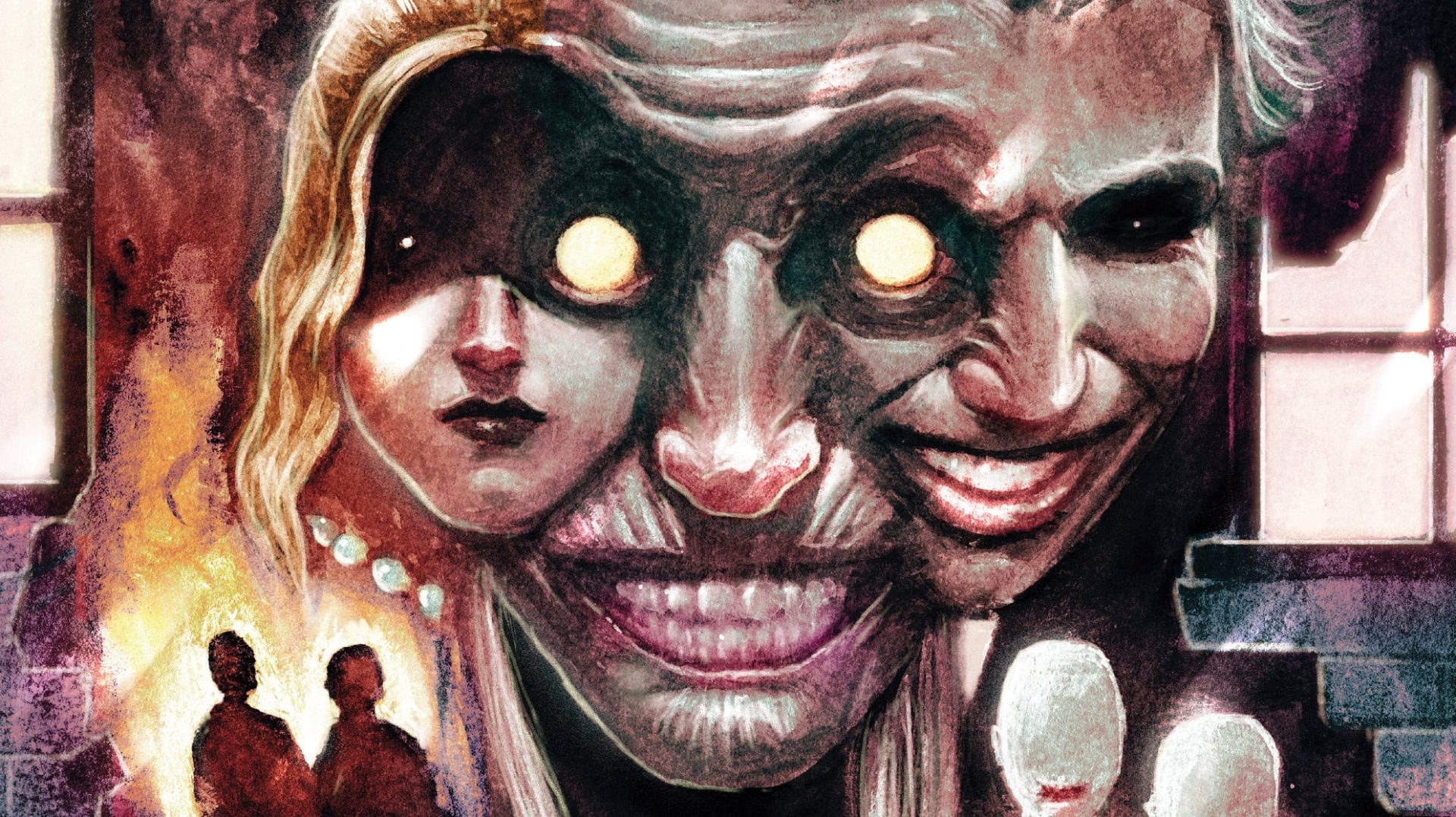
That makes We Cannot Remain an intriguing new doorway into the subject. The recently announced horror comic reunites writer Cullen Bunn and artist Marika Cresta, and its early description promises “a different kind of haunted house” story. Public details remain limited, which means there is no reason to pretend we already know every room inside it. But the premise’s distinction is enough to raise the right question: what happens when comics stop treating the haunted house as a fixed setting?
Here are nine other comics that have answered that question in wonderfully strange ways.

1. We Cannot Remain — Cullen Bunn and Marika Cresta
Let’s start with the newest mystery. We Cannot Remain is being positioned as a new horror comic and a reunion for Bunn and Cresta. The available announcement material emphasizes that this is not simply another haunted mansion with an overworked ghost rattling chains in the attic.
That is all we need for now. In fact, the lack of plot detail is part of the appeal. A haunted-house story works best when the architecture keeps changing in the reader’s mind. The title itself sounds less like a warning shouted by a specter than a verdict delivered by a place, a family, or a group of people who have discovered that staying put is impossible.
Consider this the front porch. The comics below show just how many directions the genre can take once the house stops behaving like a house.
2. Locke & Key — Joe Hill and Gabriel Rodríguez
Locke & Key begins with an old house and then asks the most dangerous possible question: what if every door had a supernatural function?
Keyhouse is not merely haunted. It is an engine for converting childhood curiosity into catastrophic bad decisions. Its keys turn the building into a collection of impossible thresholds, allowing the series to explore grief, family history, identity, and the seductive stupidity of trying one more door.
That makes the house feel less like a container for horror than a machine that manufactures it. The terror is not just what lives inside Keyhouse. It is the knowledge that the house is full of tools, and that someone will always be foolish enough to use them.
3. The Nice House on the Lake — James Tynion IV and Álvaro Martínez Bueno
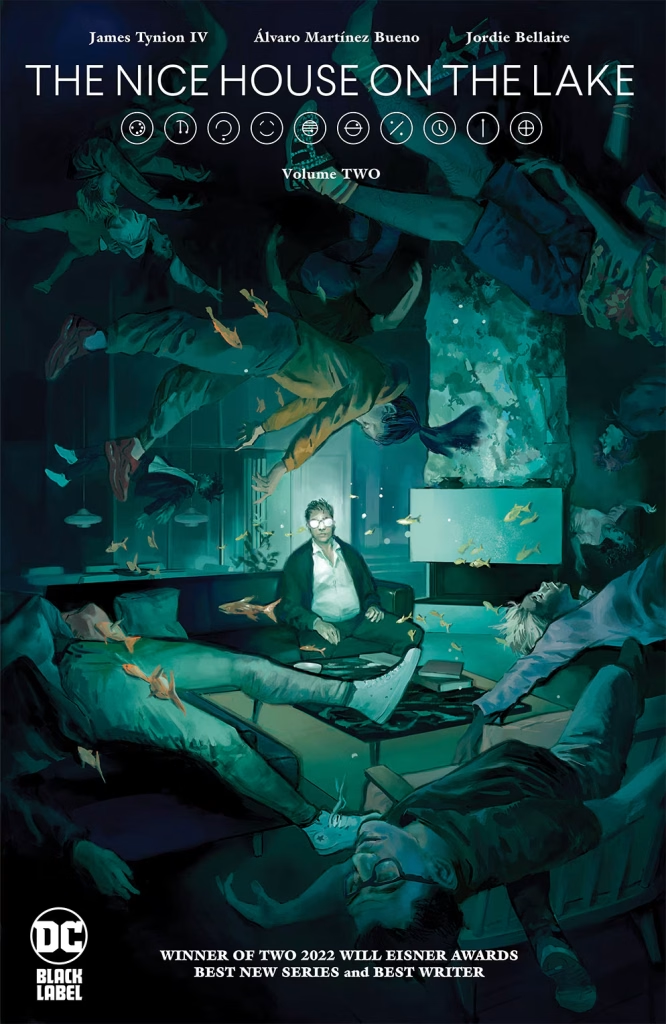 The title is practically a dare. Of course the house is nice. Of course the lake is beautiful. Of course the people invited to spend time there should be worried.
The Nice House on the Lake takes the familiar retreat-from-the-world setup and gives it a polished, unnerving surface. The house is less a crumbling gothic relic than a controlled environment—comfortable enough to make captivity feel like hospitality. Its horror grows from the gap between the luxury of the setting and the increasingly unbearable questions surrounding it.
This is the haunted house as social experiment. The rooms matter, but so do the relationships inside them: who knows what, who is being watched, and how long people can maintain civilized behavior when the walls are offering no useful answers.
4. Gideon Falls — Jeff Lemire and Andrea Sorrentino
In Gideon Falls, the haunted structure is not content to remain in one town—or even one version of reality. The series’ Black Barn becomes a recurring object of obsession, a place associated with disappearance, violence, and a conspiracy that feels larger every time the story tries to map it.
Jeff Lemire and Andrea Sorrentino turn the idea of a haunted building into a visual infection. Sorrentino’s layouts can make panels feel like rooms, rooms feel like panels, and the act of reading feel like walking toward something you should absolutely leave alone.
The Black Barn is frightening because it resists geography. You can search for a building. You cannot easily search for a pattern that keeps finding you.
5. Home Sick Pilots — Dan Watters and Caspar Wijngaard
What if the haunted house joined a punk band?
That is the gloriously incorrect energy of Home Sick Pilots, which mixes supernatural horror, teenage rebellion, music, and a deeply unhealthy relationship with an abandoned house. The series treats the building as a performer in its own right—something with presence, appetite, and a capacity to turn youthful alienation into physical danger.
Most haunted houses want you to leave. This one has a stronger argument: it wants to come with you. The result is a comic that understands a haunted house does not have to be quiet, old-fashioned, or respectable. Sometimes it is loud, angry, and wearing a guitar around its neck.
6. Infidel — Pornsak Pichetshote and Aaron Campbell
Infidel relocates the haunted house to an apartment building, but the change of address is only the beginning. The supernatural entities haunting the building are tied to the prejudice and fear surrounding its residents, making the haunting inseparable from the social environment outside the front door.
That makes the comic’s central space especially uncomfortable. An apartment is not an isolated mansion where a family can shut itself away from the world. It is shared, crowded, and surrounded by neighbors. The walls are thin. Private terror and public hostility leak into each other.
Infidel understands that a building can be haunted by what happened there—or by what people bring into it. The ghost story becomes a story about who gets treated as monstrous long before anything supernatural appears.
7. The Wytches — Scott Snyder and Jock
The Wytches begins with a family moving to a new home, which is the sort of decision horror characters make when they have not read enough horror. But the comic quickly pushes the threat beyond the walls. The house is part of a larger rural landscape, and the woods surrounding it feel less like scenery than a living boundary.
That distinction matters. The haunted-house formula usually promises safety outside and danger inside. The Wytches blurs the border until the entire environment feels complicit. The family’s home cannot protect them because the land itself has become part of the problem.
Jock’s stark, scratchy artwork gives the story an appropriately feral atmosphere. The result is a reminder that sometimes the house is not haunted at all. Sometimes it is simply the first place where the haunting becomes impossible to ignore.
8. The House of Mystery — the Vertigo series
The title says “house,” but the series’ real subject is storytelling. In the Vertigo version of The House of Mystery, the impossible residence becomes a gathering place for people who exchange tales, with the building functioning as both setting and narrative frame.
That makes it a haunted-house comic in the old anthology tradition and a sly commentary on that tradition. The house contains stories, but the stories also define the house. Every tale adds another layer to the place, making the architecture feel like a scrapbook assembled from nightmares.
It is the haunted house as literary trick: a location that keeps asking whether the danger comes from the building, the storyteller, or the audience that wants to hear one more scary story before bed.
9. Through the Woods — Emily Carroll
Emily Carroll’s Through the Woods is not a conventional haunted-house series, and that is exactly why it belongs here. Across its horror stories, homes, cabins, bedrooms, and family spaces become unstable thresholds. The woods outside are terrifying, but so are the domestic interiors that supposedly keep the darkness out.
Carroll is brilliant at making a room feel like a trap without filling it with obvious machinery. A doorway becomes a question. A bed becomes a hiding place with terrible limitations. The house is frightening because it is intimate, and intimacy means there are things the characters should recognize but cannot.
These stories also understand the oldest rule of the haunted house: the scariest room is often the one that looks most ordinary.
10. Beasts of Burden — Evan Dorkin and Jill Thompson
In Beasts of Burden, a group of dogs—and, eventually, a cat—investigate supernatural problems in their neighborhood. That setup sounds adorable until the animals are dealing with ghosts, monsters, occult crimes, and houses that humans are not equipped to understand.
The series bends the haunted-house story through perspective. A home that looks normal to a person may smell wrong to a dog. A supposedly empty room may be full of evidence. The domestic world becomes uncanny because the investigators experience it through senses and instincts humans routinely ignore.
There is warmth in Beasts of Burden, but it never softens the horror too much. These animals are brave because they have to be, not because the supernatural is any less awful when viewed from floor level.
The house is never just the house
These comics demonstrate why the haunted house refuses to die as a horror setting. It can be a mansion, an apartment, a retreat, a barn, a rural home, a story engine, or an entire landscape pretending to be a building. It can embody grief, prejudice, family secrets, teenage rage, or the poisonous comfort of staying somewhere you should flee.
That is why We Cannot Remain is a promising place to begin a new tour of the genre. Its early description suggests another attempt to shake the formula loose from its foundations. Whether the story’s house is supernatural, psychological, metaphorical, or some nasty combination of all three, the important question is not simply “What is haunting the building?”
It is: what does the building become when the people inside can no longer agree on what home means?