

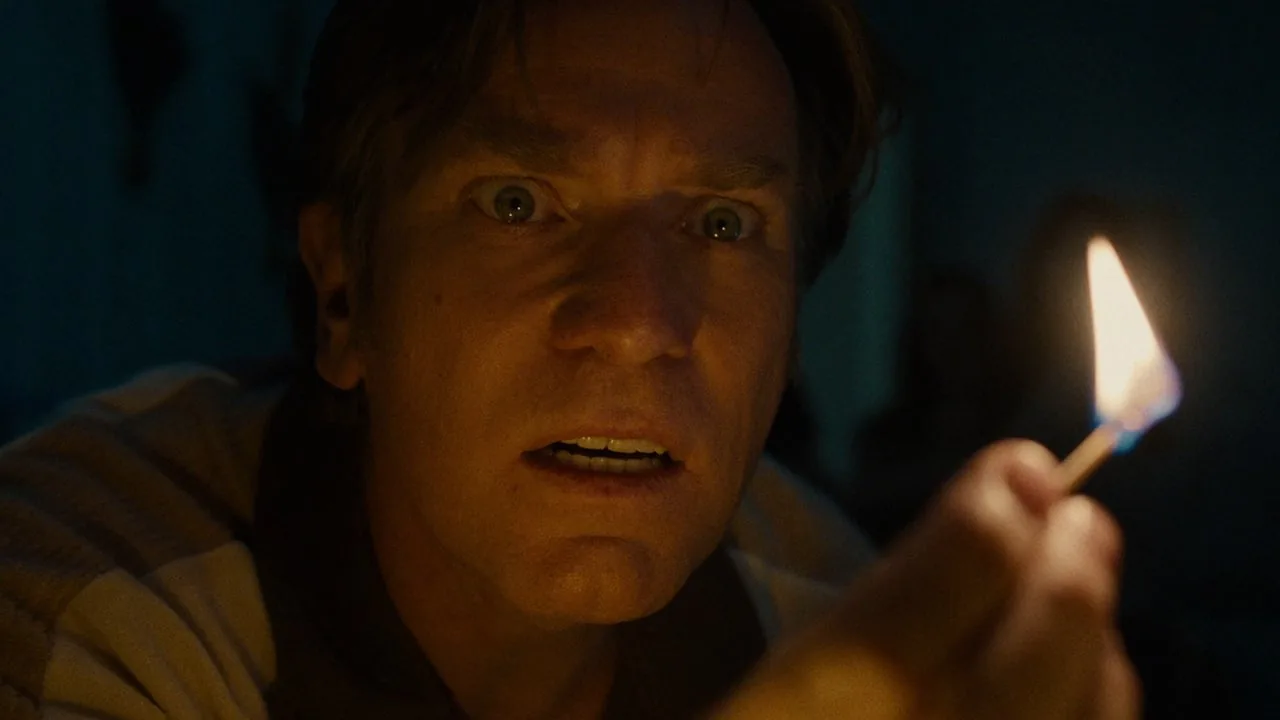

THE END OF OAK STREET
★★★½ / 4
 There was a time when a “summer movie” meant more than simply a movie that happened to come out between May and August.
It meant size. It meant spectacle. It meant sitting in an air-conditioned theater on a blisteringly hot afternoon and watching filmmakers throw something enormous at the screen. It meant wonder with just enough danger underneath it to make you a little uncomfortable.
The End of Oak Street is a big summer movie that actually feels big.
More importantly, it feels like a genuine throwback to the era of summer spectacle cinema that Hollywood has spent the better part of the last twenty years desperately trying to recreate—and usually getting wrong.
There’s Amblin Entertainment in this movie’s DNA. There’s Spielberg in there, too, specifically the Spielberg from the days when he wasn’t afraid to show his teeth. Back when wonder and terror weren’t mutually exclusive. When kids could ride their bikes toward something extraordinary, but whatever was waiting for them might actually hurt somebody.
And somehow, The End of Oak Street understands the distinction.
What surprised me most is how naturally director David Robert Mitchell makes the leap into this kind of filmmaking. It Follows was never among my favorite films, and while I could appreciate what Mitchell was doing there, I was never particularly enamored with the finished product. Here, though, you can see a genuine maturity and evolution in his filmmaking. More than that, you can immediately tell that Mitchell was capable of handling a movie WAY more mass-digestible than his previous efforts without sanding away everything that made him an interesting filmmaker in the first place.
That’s a difficult transition.
Plenty of filmmakers with strong independent voices have been handed bigger canvases only to disappear inside them. Mitchell doesn’t. He embraces the machinery of a big summer movie while still making something that feels authored.
Perhaps the film’s greatest accomplishment, though, is its treatment of the 1980s.
Good God, have filmmakers beaten the 1980s to death.
We’ve endured an endless parade of neon logos, synthesizer scores, BMX bikes, wood-paneled basements, Walkmans and carefully placed cans of Tab from filmmakers apparently convinced that recreating the decade means dumping the contents of an ’80s nostalgia store onto the production design.
The End of Oak Street doesn’t merely set a movie in the ’80s.
It has the sensibility of an ’80s movie.
That distinction is enormous.
The pacing feels right. The characters feel right. The danger feels right. Even the movie’s willingness to occasionally get mean feels right. It doesn’t constantly turn toward the audience and elbow you in the ribs to make sure you noticed the period detail. It simply exists there.
Ewan McGregor and Anne Hathaway are particularly important to making that work. Both play directly into a kind of long-lost cinematic archetype that this movie desperately needs to anchor itself. There’s something refreshingly straightforward about their performances. They aren’t winking at these characters or trying to reinvent them through some layer of modern irony. They understand exactly what kind of movie they’re in and become the emotional foundation that allows all the increasingly enormous things happening around them to work.
And enormous they become.
The movie rides a fascinating line between family summer blockbuster and adult science-fiction spectacle. For much of its running time, you could almost convince yourself you’re watching something designed to be discovered by an entire family on a Saturday afternoon.
Then the movie reminds you that it has teeth.
There is one particularly brutal moment toward the end of the film’s second half that I won’t spoil here, but the reaction in my theater was incredible. You could practically feel everyone’s jaw hit the floor at the same time. It’s exactly the kind of moment that separates The End of Oak Street from the safer nostalgia exercises it could have easily become.
And I loved that Mitchell was willing to go there.
Because those movies we remember weren’t always safe.
They scared children. They killed characters. They occasionally traumatized an entire generation with something nobody expected to see in what had been marketed as a fun summer adventure. Somewhere along the way, Hollywood’s attempts to recapture that era remembered the bicycles and flashlights and suburban neighborhoods but forgot about the darkness lurking just outside the beam.
The End of Oak Street remembers.
Is it perfect?
No.
There are moments when its reverence for the movies that inspired it becomes a little too apparent, and there are places where the machinery of the story doesn’t operate quite as smoothly as the film’s confidence suggests. A few beats could have been tightened, and not every emotional swing lands with equal force.
But here’s the question that ultimately mattered more to me:
Is this the movie I wanted to see in a cool, dark theater on a hot summer day?
Hell yes.
For a couple of hours, The End of Oak Street made the summer movie feel like an event again—not because a studio told me it was one, not because it belonged to an existing cinematic universe and not because I needed to stay through the credits to see an advertisement for the next installment.
It felt big because somebody actually made a big damn movie.
A little funny. A little frightening. Occasionally brutal. Earnest without becoming corny and nostalgic without becoming cosplay.
That’s summer spectacle cinema.
We’ve had an awful lot of movies trying to remind us what that felt like.
The End of Oak Street is one of the rare ones that actually does.
3.5 out of 4 stars